Museum offers answers, hope
“ Kill the Indian, …Save the man.”
This was the slogan of The Boarding School era, a time from the 1870’s to the 1960’s in Native American history, when young tribe members were torn from their families and forced to turn their backs on their heritage.
At the Ziibiwing Center in Mount Pleasant, workers attempt to make sense of this moment in history.
Renata Borton, the museum’s Visitor Service Coordinator, explained that at that point the federal government was enforcing a kind of nationalism on the people. Immigrants and natives alike had to relinquish their heritages.
There have been a variety of direct consequences related to this era, which lasted nearly 100 years, but the harmful side-effects have caused plenty of strife, not only for the Saginaw-Chippewa tribes, but for tribes across the continent.
Minnie Stevens, a security guard and speaker at the center spoke about domestic violence, a problem that many who attended the schools faced when they returned to their reservations. Unfortunately, the consequences do not stop there.
“Tribes around the United States and Canada have really high dropout rates. They have high suicide rates, they have high rates of teen pregnancy, alcohol problems. Fortunately for us, on this property, the Saginaw-Cheboygan [Chippewa] tribe has the resources to help those who are struggling,” said Borton.
The students that endured this are facing lifelong repercussions.
“Many students struggled…Our earlier participants, it was very hard for them…If you were considered a light-skinned Indian, you tried to blend in with the community that was next to you,” said Borton.
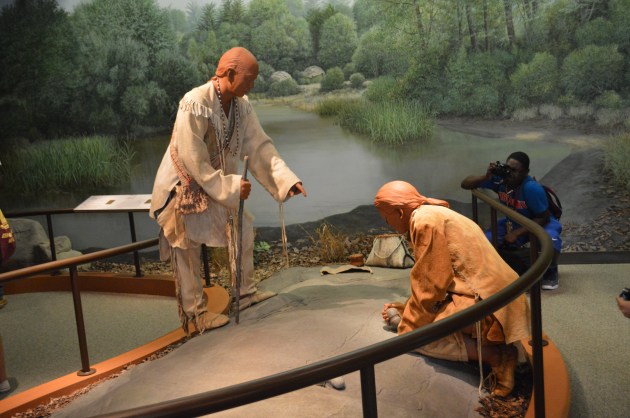
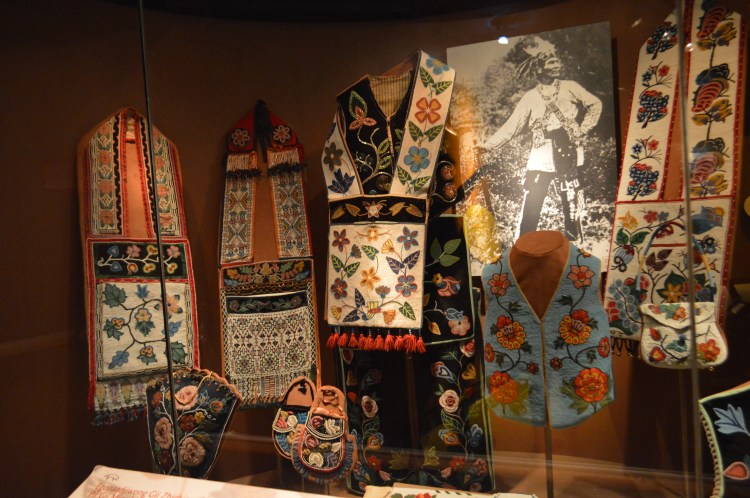
According to National Public Radio (NPR), The Kennedy Report in the 1960’s exposed the injustices, and low educational performance of these schools. Once this became widely known, they began to fade out of existence.
Stevens, a lifelong member of the tribe, offered his thoughts on the era’s end.
“I believe they just realized it wasn’t working,” he said.
The abuse of indigenous people in the U.S. did not begin with the Boarding School Era. At that point, other horrific events were taking place.
“We were already on our reservations by then. Basically, we were told ‘live here, or be arrested, and maybe killed,’” said Stevens.
In spite of the plights that they have faced, the Saginaw-Chippewa tribe is doing their best to instil a sense of pride in their culture.
“I know from working here within our community and with our youth, our tribe has done a lot of programming…a lot of making sure that our youth really do understand that they are just as vital to our community as our adults and as our elders because…That’s our next generation…,” said Borton.
 Debrah Miszak